
Key Points.
- When the rand, the Swiss franc, and the Australian dollar strengthen, financial media attributes it to domestic conditions: political stability, improving fiscal policy, rising interest rates.
- For a currency to strengthen, external capital must flow into it. No domestic population has the collective scale to move its own exchange rate.
- A small group of US financial institutions — managing assets that dwarf the GDP of entire continents — are the only entities with sufficient capital to move global currencies simultaneously.
- On 2 April 2025, US tariffs on the rest of the world triggered a three-stage trade: buy foreign currencies, buy their bonds as rates are cut, then buy their equity indices. US financial institutions did that.
- Wall Street trading desks recorded bonus growth of 15–25% in the 2025/26 cycle as a result of the trade described above.
- The same capital that drove currencies up can reverse just as quickly.
Open a South African newspaper in mid-2025 and you would have read that the rand was strengthening because of political stability, improving energy supply, and growing international confidence in the country’s direction. Open a Swiss financial publication and you would have found reassuring commentary about the franc’s safe haven status attracting cautious capital from around the world. Open an Australian business journal and you would have seen analysis crediting commodity demand and Reserve Bank policy for a firming dollar.
The Misconception
The instinct when a currency strengthens is to look inward. Rising exports, improving fiscal discipline, higher interest rates attracting foreign capital — these are the explanations that feel intuitive because they connect national effort to national outcome. They are also, in most cases, wrong.
The mechanics of currency movement are straightforward. For a currency to strengthen, external capital must flow into it. Every top earner in a country — every institution, every business, acting in perfect concert — does not have the collective scale to move their own exchange rate. The question is therefore never what is this country doing? It is always who has enough capital to move it, and why?
The Institutions
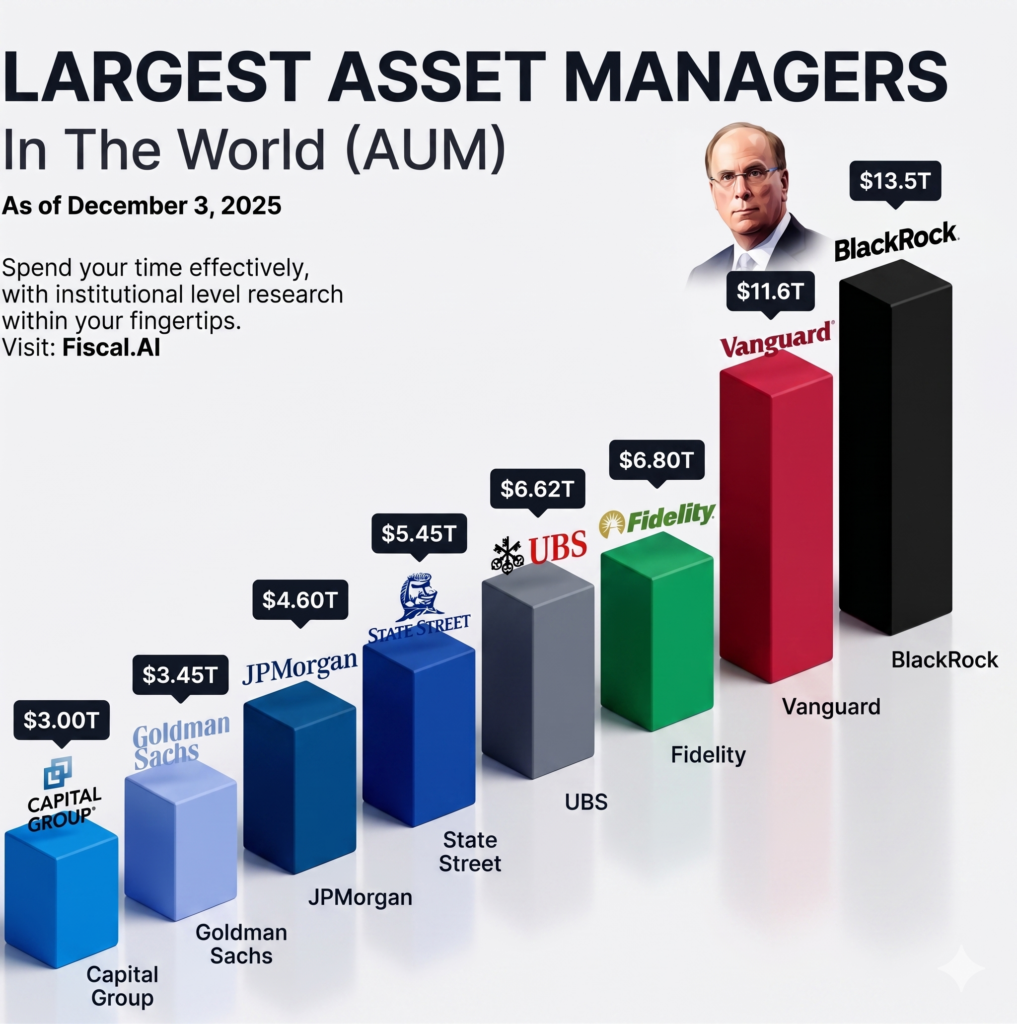
The answer to that question is a short list. BlackRock manages 13.5 trillion in assets — roughly ten times the entire GDP of Australia. Behind it sit Vanguard, Fidelity, State Street, JP Morgan, Goldman Sachs, and Capital Group. No Australian institution appears on this list. No South African bank. No British firm. There is one European entry: UBS. These are the entities that determine whether the rand, the franc, or the Australian dollar strengthens or weakens in any given period. Not the Reserve Bank of South Africa. Not the Swiss National Bank. Not the RBA.
When these institutions move capital in concert, every currency on earth moves in the same direction simultaneously. It is not a coincidence, it is a trade.
The Trade
On 2 April 2025, the United States announced sweeping tariffs on the rest of the world. For the largest US financial institutions, the investment logic that followed was precise.
Tariffs push trading partners into recession. Recession forces interest rate cuts. Interest rate cuts make bonds more valuable. At the same time, the US itself faces inflation and accelerating growth from tariffs and reshoring — meaning it cannot cut its own rates. US Treasuries become comparatively unattractive.
The trade ran in three stages. First, buy the foreign currency — it strengthens as capital flows in. Second, buy the bonds as central banks cut rates — bond values rise as yields fall. Third, once rates are low enough, buy the equity index ETFs — the rate denominator falls, asset valuations rise, and markets follow. Each stage compounds the return of the one before it.
Three Currencies, One Cause
The rand’s strengthening in 2025 generated considerable commentary about South Africa’s improving political landscape and progress on structural reform. South Africa did cut interest rates. The rand did strengthen. What the commentary omitted was that the same move occurred across currencies in countries with no equivalent political narrative — because the driver was not South Africa. It was capital flowing in from outside, seeking the currency gain, the bond appreciation, and ultimately the equity upside that rate cuts would unlock.
The Swiss franc presents the more instructive case, because it carries a specific claim: safe haven status. The franc is the currency investors are supposed to buy when the world becomes uncertain. In calendar year 2025, franc strengthened by 14.4% against the dollar, according to data service EODHD. Funds flowed into the franc.
Yet in early 2026, the franc fell over 5% against the dollar from peak to trough at time of writing — not because Switzerland deteriorated, not because its institutions weakened, but because the capital that had driven it higher reversed direction. Safe haven status does not override the flow. When the institutions that moved the franc up decide to move it back, the safe haven narrative offers no protection.
The Australian dollar completes the picture. It trades in a relatively narrow band for extended periods, then moves sharply in ways that local commentary attributes to commodity prices, Chinese demand, or RBA decisions. The actual pattern — a simultaneous move in the same direction as the rand and the franc, driven by the same capital, at the same time — tells a different story. Three continents, three separate explanations in the financial press result from the same trade.
The Evidence on the Trading Floor
Wall Street trading desks recorded their strongest bonus cycle in years in 2025/26. Equity sales and trading saw bonus growth of 15–25%. Fixed income, currencies, and commodities desks — the desks that would have executed the currency and bond legs of this trade — recorded increases of 5–15%.
The Reversal
The trade reverses when two conditions emerge: inflation takes hold in the countries that received the capital — making further rate cuts impossible — and the US itself needs its capital back. Both conditions are now in play. Inflation is rising across multiple markets that cut rates in 2025. The trillions deployed globally — estimated at $4–$22 trillion after currency and asset appreciation — is beginning its return to the US. It is the completion of the trade.
At AXIAM, we invest in businesses that generate cash regardless of where the rand or the franc trades in any given month. The companies we own sell food, medicine, and consumer goods to billions of people whose need for those products does not change with exchange rates. We prefer to own the businesses that profit from human needs.