
Key Points.
- China has added more gold to its reserves than any other nation since 2020 – 557 tonnes, accumulated across 17 consecutive months as of March 2026.
- In February 2022, the West froze Russia’s overseas assets following the invasion of Ukraine. China observed the vulnerability of its own foreign holdings.
- China responded by converting dollar-denominated assets into physical gold – reducing US Treasury holdings from 29% to 7.3% of total reserves, and dollar foreign exchange holdings from 78% to approximately 37%.
- The gold price rise attracted momentum buyers. In the same period, the US and Switzerland were net sellers.
- Understanding why an asset price changes is essential.
This article examines how asset prices move because buyers exceed sellers, and then accelerate as momentum traders join the buying. Price appreciation does not change what an asset produces — or whether it produces anything at all — for its owner.
China’s Gold Accumulation
Since 2020, China’s central bank has added 557 tonnes of gold to its reserves — more than any other nation and nearly twice the purchases of Poland, the second-largest buyer in the same period. As of March 2026, the People’s Bank of China has added gold for 17 consecutive months. Over the same period, gold’s price has risen 265%.
The numbers behind this shift tell a precise story. In June 2011, US Treasuries represented 29% of China’s total foreign holdings. By November 2025, that figure had fallen to 7.3%. Simultaneously, China’s US dollar foreign exchange holdings declined from 78% of total reserves to approximately 37%. This is not portfolio rebalancing. It is a deliberate structural exit from dollar-denominated assets — and gold is what is replacing them.

The Catalyst
In February 2022, Russia invaded Ukraine. Within weeks, Russia’s overseas assets — government bonds, property, ships, corporate holdings — were frozen by Western governments. Hundreds of billions of dollars in accumulated wealth became inaccessible overnight. A Russia’s assets became trapped inside the financial system of its adversaries.
China was watching. With Taiwan a permanent feature of its strategic calculus, Beijing drew the obvious conclusion: assets held in Western financial systems are a liability the moment geopolitical confrontation becomes reality. Partners in Western businesses began unwinding Chinese investment relationships in late 2022 — withdrawals that could not be fully explained by market conditions alone. A client in our own network observed exactly this with Chinese investors divesting from a western business. The gold purchases were the other side of that trade. Assets that could be frozen were sold, gold purchased, and repatriated to China.
Understanding Gold
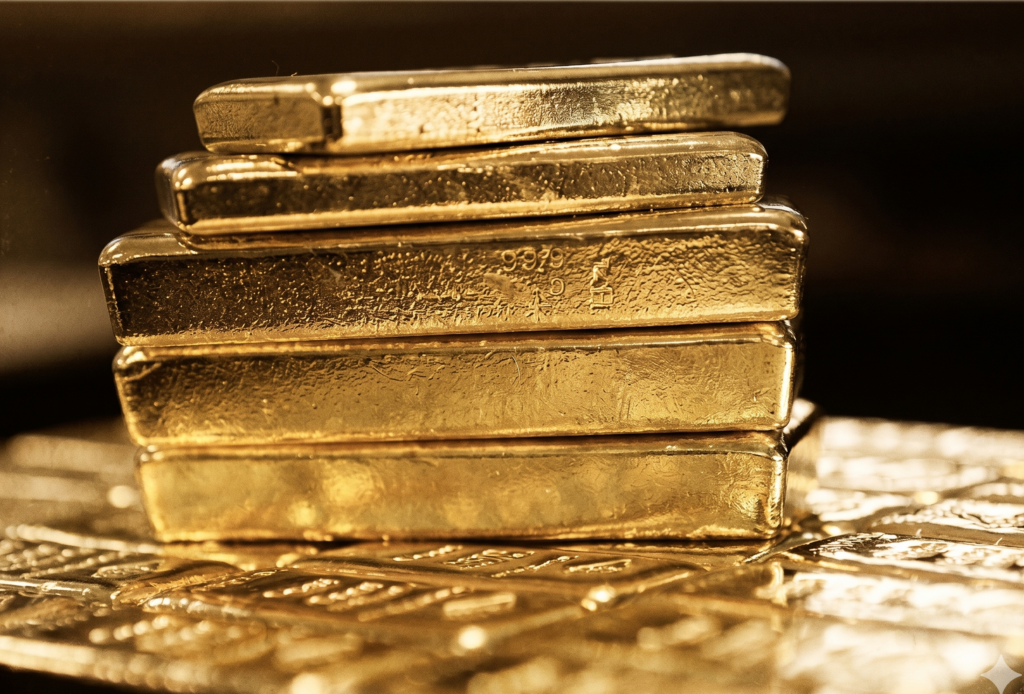
In 2011, Warren Buffett offered one of the most useful assessments ever written about gold as an asset. At $1,750 an ounce at the time, the world’s entire gold stock — roughly 170,000 metric tons — was worth approximately $9.6 trillion. For the same sum, Buffett noted, an investor could instead own all US farmland producing $200 billion annually, sixteen of the world’s most profitable companies, and still have $1 trillion remaining. The gold, he observed, would simply sit there. As Buffett put it: “You can fondle the cube, but it will not respond.”
Gold pays no dividend, generates no earnings, and produces nothing its owner can sell. Its value is determined entirely by what the next buyer will pay.
The Meme and the Signal
China’s purchases moved the gold price. Once moving, the price became a signal — and the original reason became irrelevant to everyone who followed the trend. This is the structure of every momentum trade: the original buyer has a thesis. Everyone who follows has a trend.
During the period that China accumulated 557 tonnes, the two most credible actors in global gold markets — the United States and Switzerland — were net sellers. Germany and the Euro Area sold too. When the most financially sophisticated holders of an asset are positioned on the opposite side of a trade from the momentum buyers, the nature of that trade deserves scrutiny.
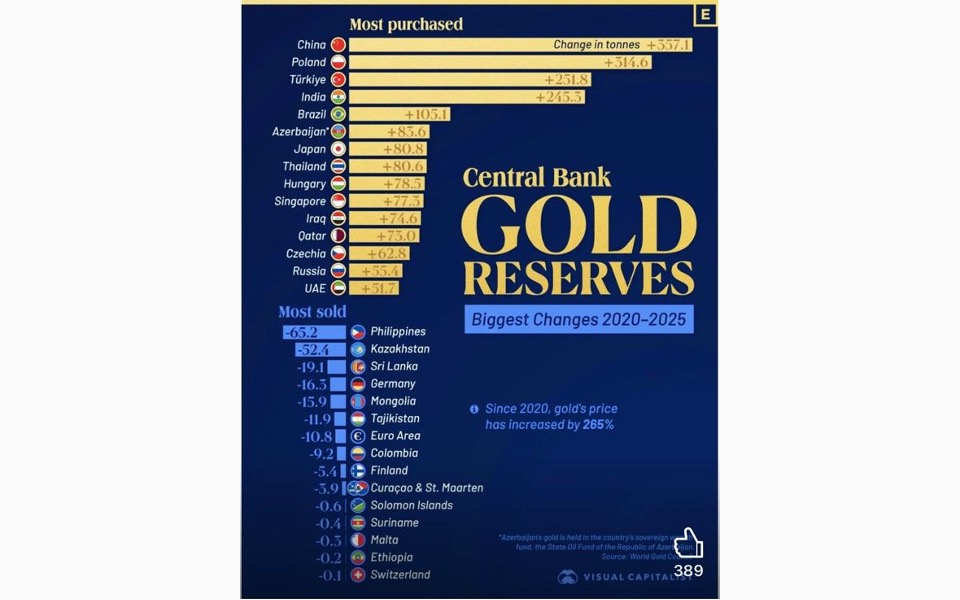
China’s logic is internally coherent — physical gold held inside its own borders cannot be seized by a foreign power. But it carries costs: storage, security, the absence of any yield, and an exit that depends on finding buyers at the moment liquidity is most needed.
At AXIAM, we invest in businesses that produce something — cash, earnings, and the capacity to compound value across time. Gold tells us something important about the geopolitical anxieties driving capital decisions at the highest levels of state. The businesses we own serve needs that exist regardless of what central banks buy, what governments freeze, or what social media trends amplify.